Biomass Ethanol Production Project
Uganda • Industry & Manufacturing
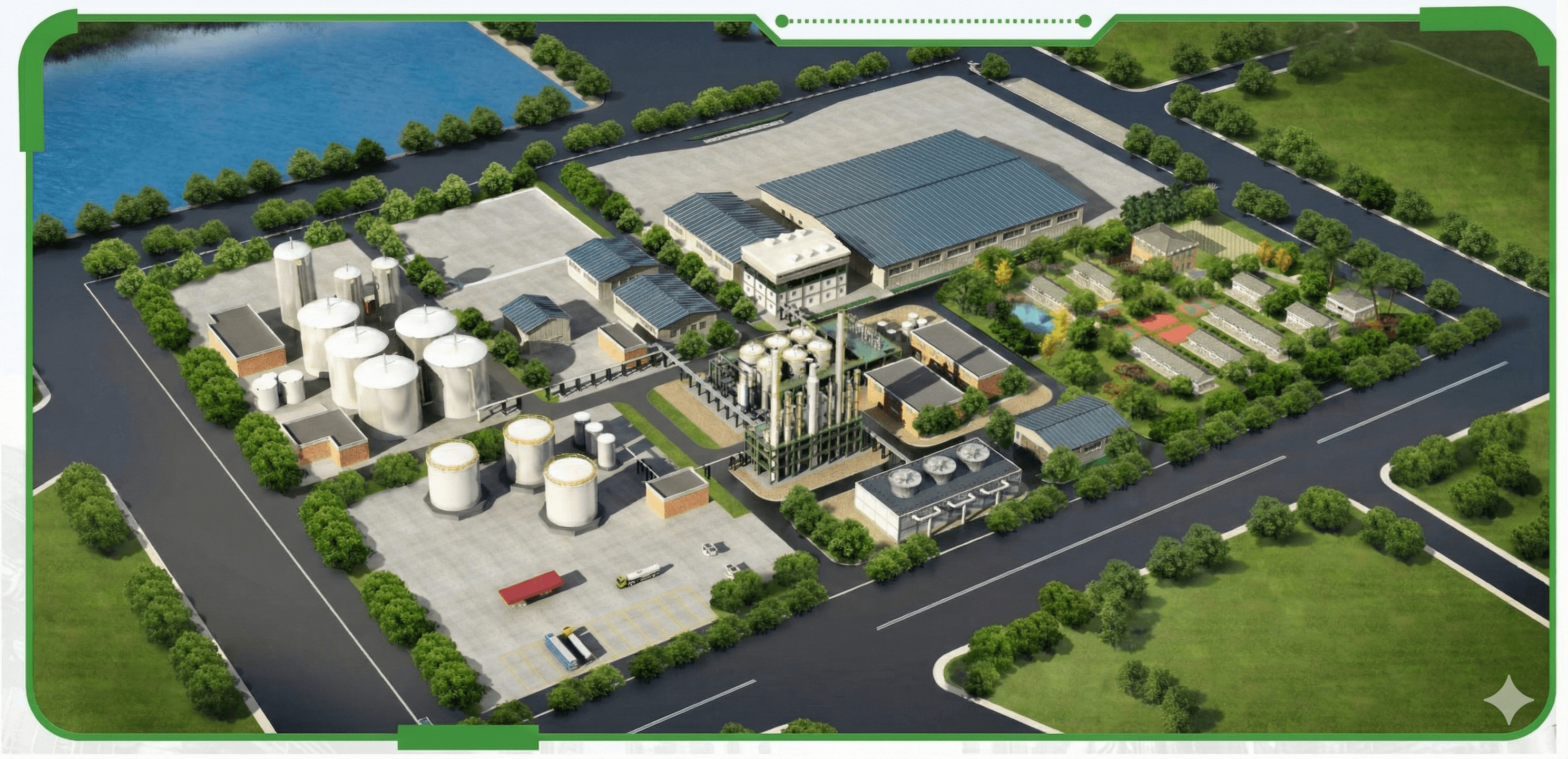
Fuel ethanol from locally sourced maize
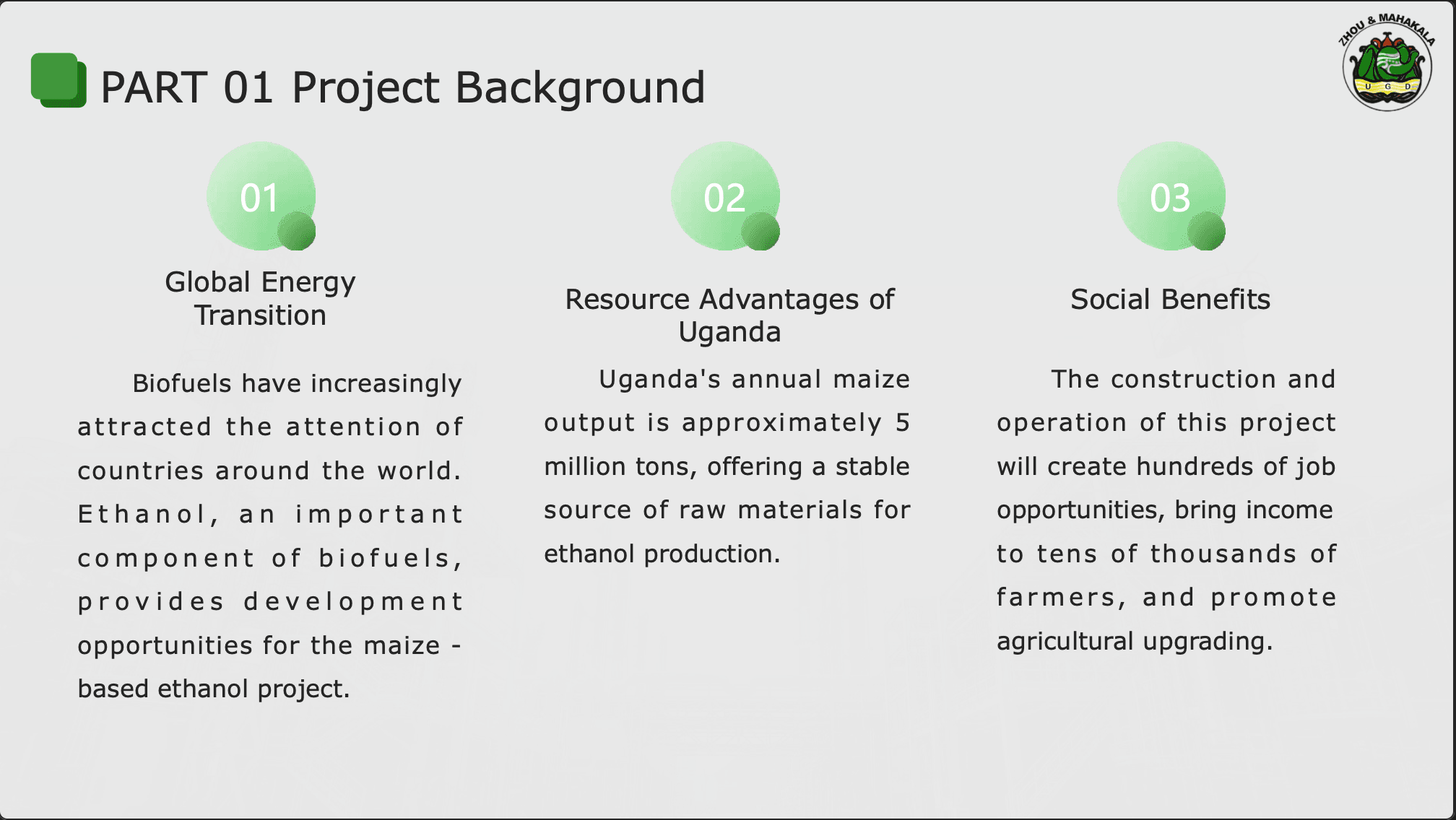
The Biomass Ethanol Production Project is designed to produce fuel ethanol from locally sourced maize, supporting Uganda's transition toward cleaner energy while reducing dependence on imported petroleum products.
Through a structured contract-farming model, the project integrates industrial production with smallholder agriculture, generating rural incomes while strengthening national energy and manufacturing capacity.
Project details
- Project Name
- Biomass Ethanol Production Project
- Sector
- Industry & Manufacturing
- Sub-sector
- Renewable Energy & Biofuels
- Location
- Uganda
- Project Type
- Maize-Based Fuel Ethanol Production
- Core Objective
- Reduce petroleum imports and support Uganda's energy transition
- Feedstock
- Maize sourced through contract farming
- Production Capacity
- 100,000 tons of fuel ethanol per year
- Land Area
- 80 acres
- Total Investment
- USD 65 million
- Construction Period
- 2025–2028
- Development Status
- Planned
Abstract
This proposal outlines a biomass ethanol investment anchored in Uganda's maize supply base and the global shift toward cleaner fuels. It presents a "company + farmer" operating model built on planting and purchasing agreements to stabilize quality and volumes of feedstock. The plan emphasizes modern fermentation and distillation process choices, plus environmental controls (waste residue and sewage treatment) to support sustainable operations. Commercially, it positions ethanol as a strategic product for fuel blending and energy security, while creating broad-based incomes through supply-chain participation and job creation. The document frames development as a phased, multi-year build toward industrial scale.